Smart Bus Shelters Enhance Mobility & Create Sustainable Urban Transportation
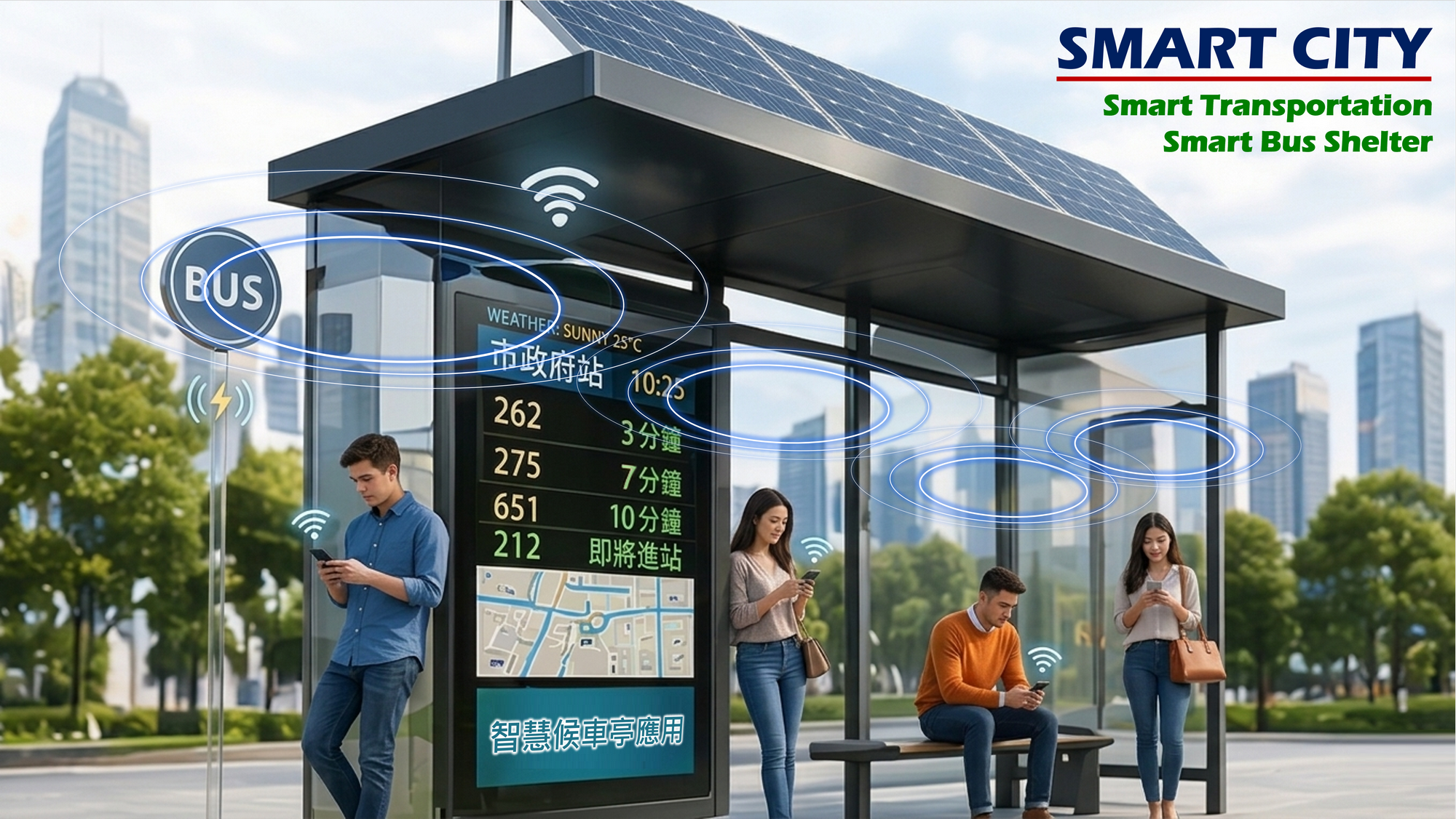
With the development of smart cities and digital transportation, traditional bus shelters have gradually transformed into "smart nodes" integrating information services, environmental sensing, and public safety. Through the Internet of Things (IoT), cloud computing, and mobile communication technologies, smart bus shelters not only provide real-time bus information but also extend into urban data collection and service platforms, improving the overall public transportation experience and operational efficiency. This solution uses the IAD200 industrial-grade 4G LTE router as its core to construct a highly reliable and secure smart bus shelter communication architecture, realizing integrated applications of real-time information, environmental monitoring, advertising operations, and smart transportation.
I. Application Background and Needs Analysis
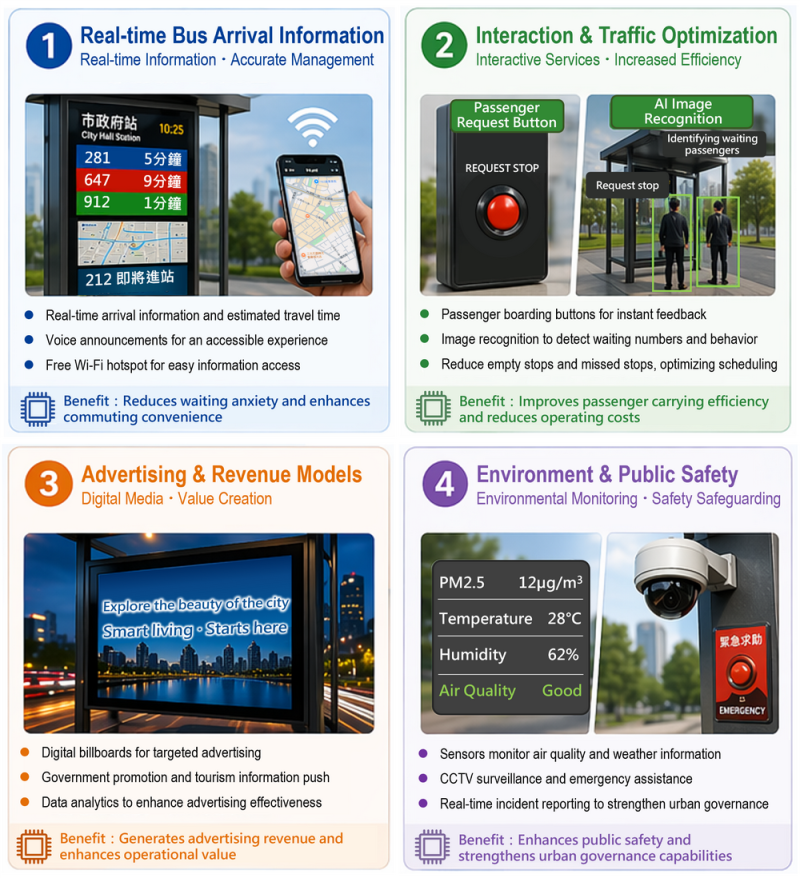
Smart bus shelters have been implemented in many parts of Taiwan, integrating 4G and Wi-Fi, weather information, and environmental monitoring functions. They can even detect passenger demand through image recognition, improving bus stopping efficiency.
II. Overall System Architecture
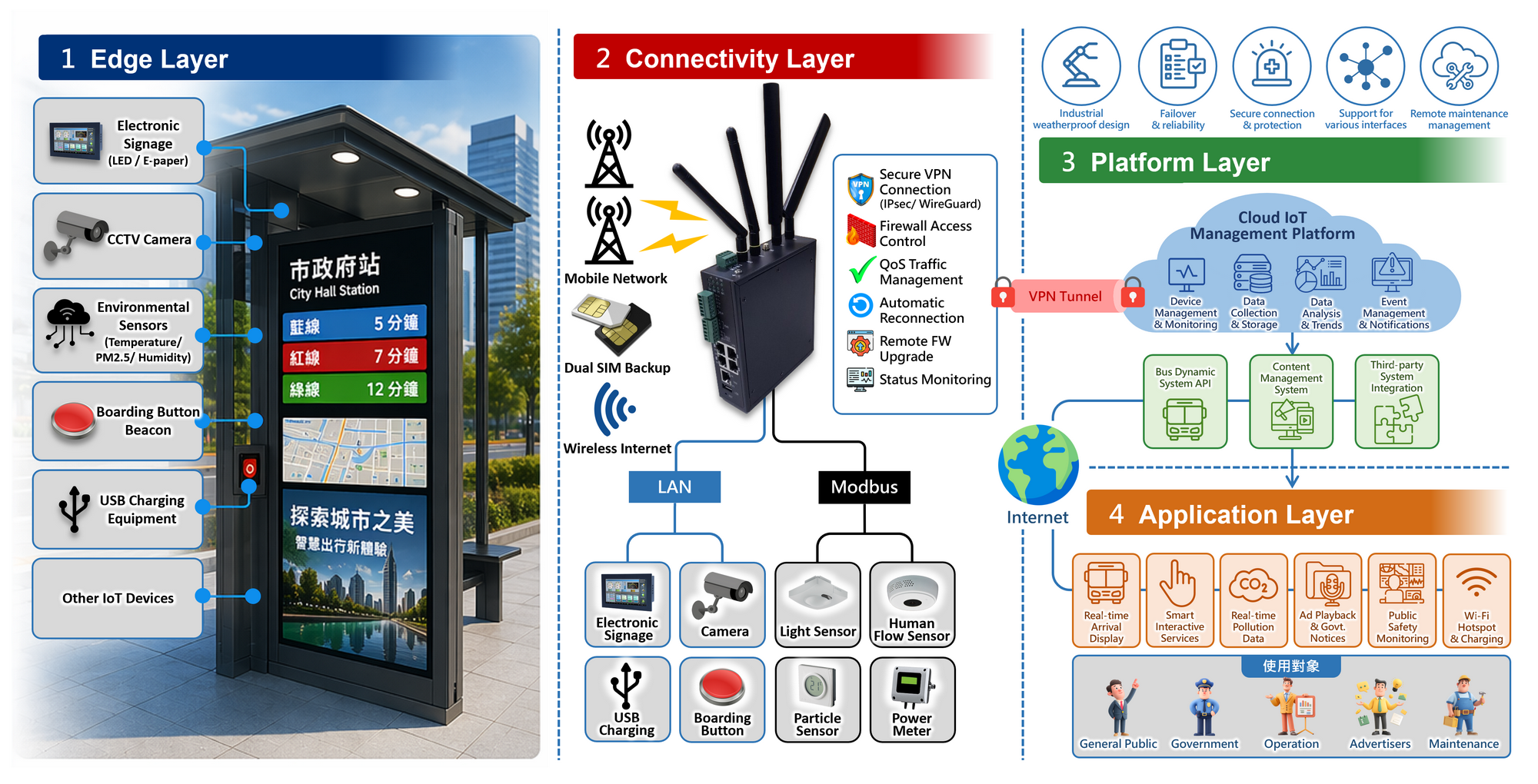
The smart bus shelter application solution focuses on high stability, high security, and ease of maintenance, creating a complete smart transportation IoT communication architecture. The overall system is divided into four layers: sensing and device layer, communication layer, platform layer, and application layer. From front-end data collection and stable connection transmission to cloud management and diverse application services, it forms an integrated solution.
This architecture is human-centered, providing real-time arrival information, intelligent interactive services, and security monitoring mechanisms, effectively improving the convenience and peace of mind of the public when using public transportation. Simultaneously, through data integration and energy-saving design, it further enhances urban governance efficiency, promotes low-carbon and sustainable development, and realizes a safe, intelligent, and forward-looking smart transportation city.
III. The Core Role of IAD200 in Smart Bus Shelters
In the smart bus shelter architecture, the IAD200 plays a crucial communication hub. Since bus shelters are widely distributed outdoors, traditional wired networks are difficult and costly to deploy. Mobile communication technology enables rapid deployment, ensuring real-time connectivity and stable operation.
Regarding connection reliability, it supports dual SIM card backup and automatic switching mechanisms, and features automatic reconnection, flexibly handling signal instability or interruptions to ensure continuous data transmission, making it particularly suitable for rural areas or solar-powered environments. For cybersecurity, VPN encrypted communication combined with a firewall mechanism rigorously protects data transmission security.
Furthermore, the IAD200 supports various detection applications, remote monitoring and management, and significantly reduces maintenance costs through alarms and firmware updates. In summary, the IAD200 integrates communication, cybersecurity, and intelligent management capabilities, making it a core device for promoting smart transportation and modern bus shelter services.
V. Benefits of Implementation
Implementing IoT applications without replacing existing air conditioning equipment enables remote monitoring and energy-saving control through the IAD200 industrial-grade 4G LTE router and sensors. The lower CAPEX investment effectively saves on electricity costs while improving air quality and comfort. Furthermore, data analysis enhances equipment maintenance and ESG management efficiency.
VI. Future Development Trends
With the rapid development of smart cities, bus shelters have transformed from traditional information display facilities into crucial digital nodes in urban transportation. Connecting with vehicle-to-everything systems, integrating autonomous buses, smart traffic signals, and transportation hubs, they improve transportation efficiency and driving safety. Combining image recognition and behavioral analysis, they can also predict passenger demand and optimize schedules, providing a more immediate and personalized service experience.
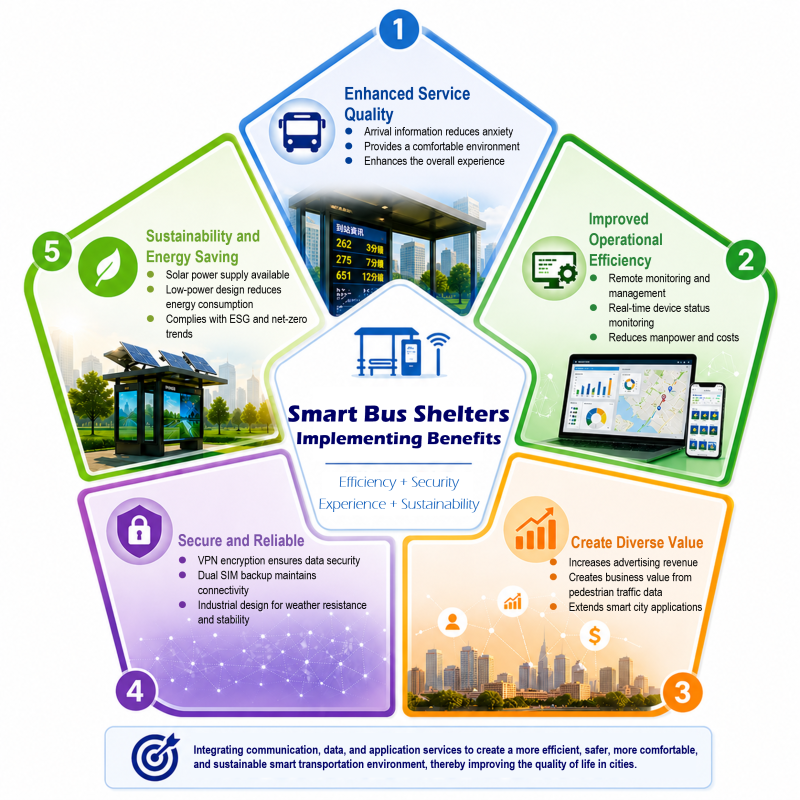
In terms of sustainability, the adoption of solar power, low-power devices, and energy management mechanisms effectively reduces operating costs while aligning with the ESG net-zero trend. The IAD200 provides stable connectivity, cybersecurity, and remote management capabilities, assisting in the rapid deployment and creation of a high-efficiency IoT architecture, becoming a core component of smart transportation development.