Menu
Home
About TAINET▾
▶▶▶ ABOUT TAINET
Milestone
Philosophies
Declaration
Certification
Visions
Products▾
▶▶▶ All PRODUCTS
Wireless Router
VoIP Gateway
Analog Modem
Ethernet Access
Fiber Optic
xDSL LAN Extender
E1 Utilization
Smart HomeCare
Solutions▾
▶▶▶ ALL SOLUTIONS
Smart City Transport
Smart HomeCare
Power & Utilities
Smart Manufacturing
Fiber Optic & Last Mile
News▾
News
EOL Notice
Sustainability▾
Sustainability
Governance Practices
Practice Principles
Board of Directors
Functional Committee
Internal Auditing
Information Security
Friendly Workplace
Sustainable Development
Sustainability Report
Contact Us▾
Contact Us
Customer Rights
Language▾
繁體中文
简体中文
Contact
Home
About TAINET▾
▶▶▶ ABOUT TAINET
Milestone
Philosophies
Declaration
Certification
Visions
Products▾
▶▶▶ All PRODUCTS
Wireless Router
VoIP Gateway
Analog Modem
Ethernet Access
Fiber Optic
xDSL LAN Extender
E1 Utilization
Smart HomeCare
Solutions▾
▶▶▶ ALL SOLUTIONS
Smart City Transport
Smart HomeCare
Power & Utilities
Smart Manufacturing
Fiber Optic & Last Mile
News▾
News
EOL Notice
Sustainability▾
Sustainability
Governance Practices
Practice Principles
Board of Directors
Functional Committee
Internal Auditing
Information Security
Friendly Workplace
Sustainable Development
Sustainability Report
Contact Us▾
Contact Us
Customer Rights
Language▾
繁體中文
简体中文
Industry 4.0 Smart Manufacturing
Smart City Transportation
Smart Homes & Smart Care
Power & Utilities
Industry 4.0 Smart Manufacturing
Fiber & Last Mile
Transform into a smart factory via M2M
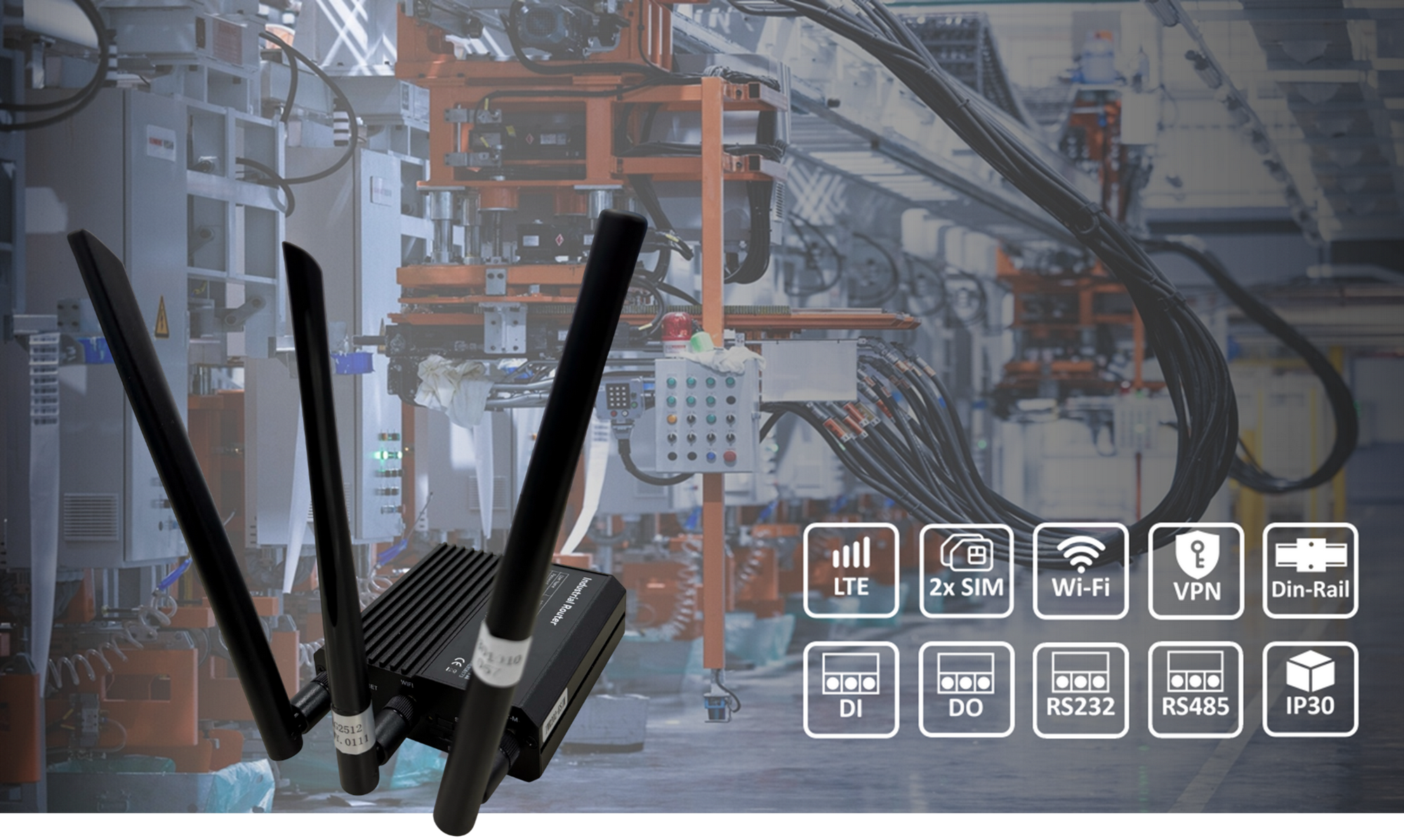
With the rapid development of Industry 4.0 and smart manufacturing, factories are increasingly demanding more networked equipment, real-time monitoring, and data analysis capabilities. While traditional wired networks offer stability, their limitations in flexible deployment, cross-regional connectivity, and maintenance costs are becoming apparent. The introduction of the IAD202F industrial-grade 4G LTE router has become a crucial element in realizing M2M communication in smart factories. Its high stability, robust design, and comprehensive communication capabilities make it a core networking node in smart manufacturing environments.
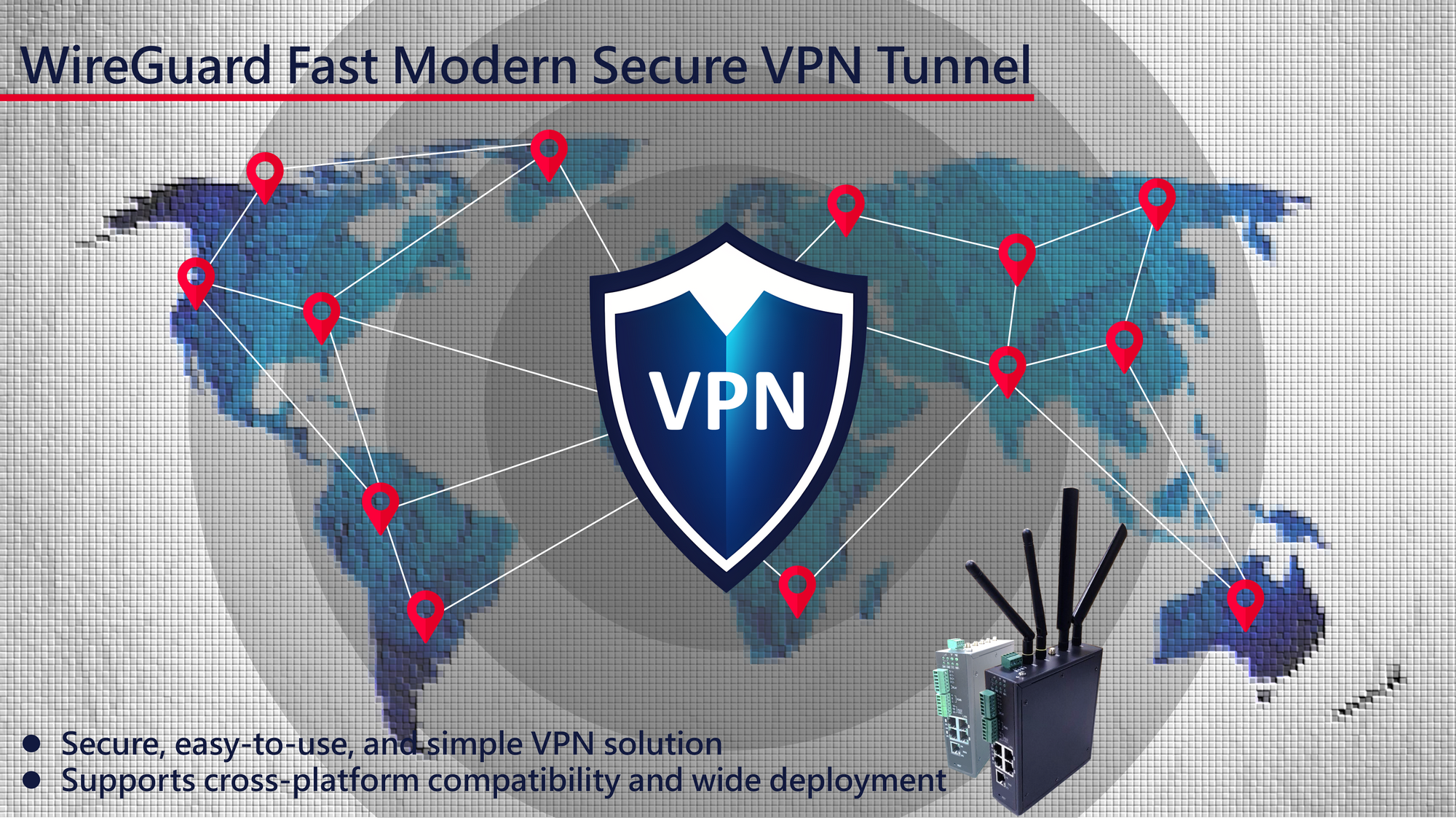
Why Enterprise/ Industrial environments need VPN
Secure interconnection between multiple offices, branch offices, and headquarters (site-to-site). Remote access for remote or outsourced personnel from home, remote locations, or mobile devices, such as ERP, internal servers, and SCADA systems. Centralized monitoring and management of industrial equipment such as PLCs, RTUs, and Modbus devices, located in factories, warehouses, and outdoor sites. Secure connectivity to hybrid cloud and public cloud resources, such as VMs, databases, and cloud platforms. Maintaining stable and secure communication in environments with poor network conditions or unstable connections.
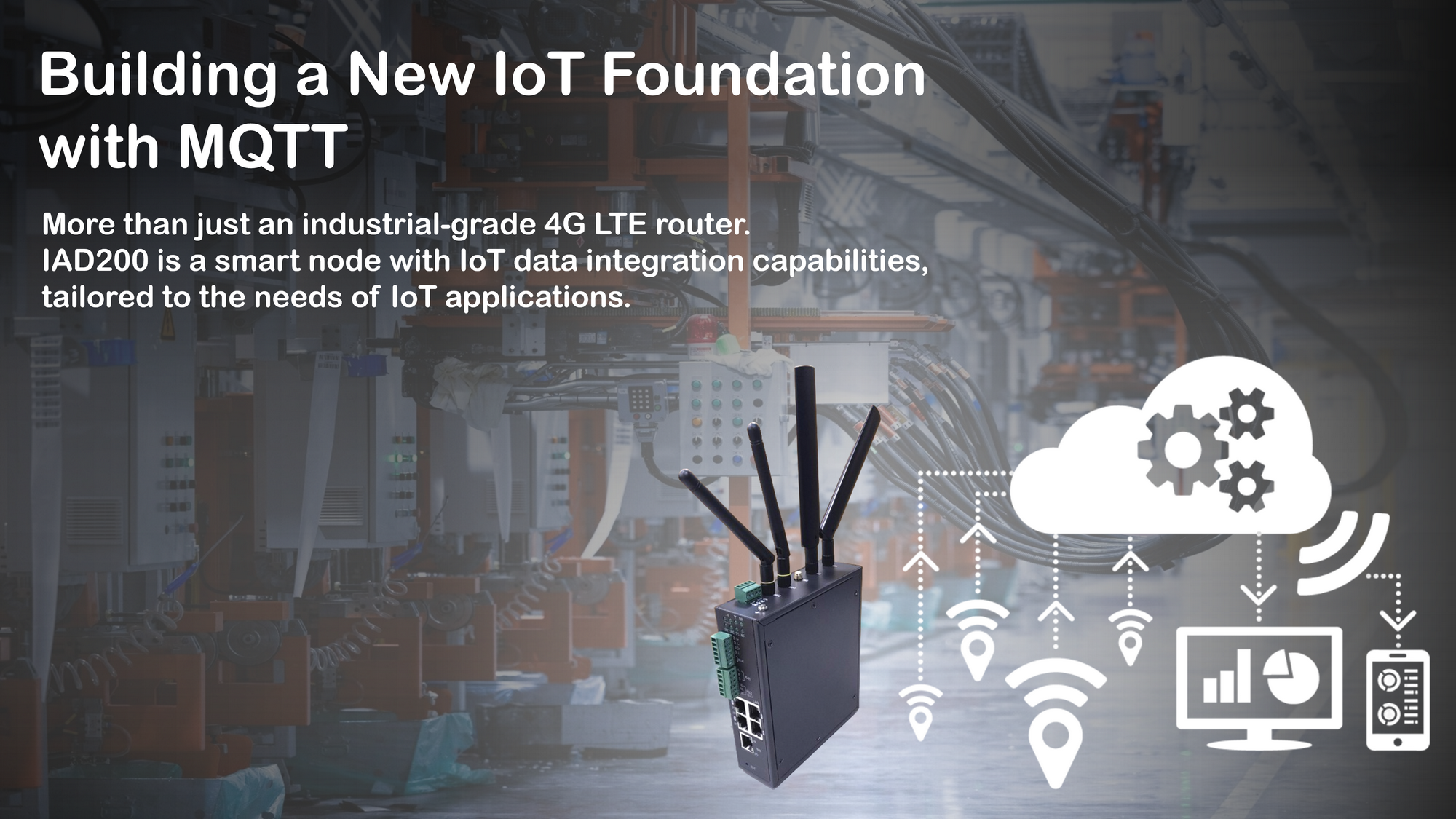
MQTT Empowers Innovative Value in IoT Applications
With the rapid adoption of IoT technology in industrial automation, smart cities, and remote monitoring, data exchange and real-time communication between devices have become core challenges. While traditional data communication protocols such as HTTP, Modbus, and SNMP are still widely used, they are often cumbersome and inefficient in IoT environments with low bandwidth, high latency, or multiple devices. In contrast, the MQTT (Message Queuing Telemetry Transport) protocol, with its lightweight, stable, and highly real-time features, has become the mainstream standard for IoT communication.