Digital upgrade of community broadcasting system
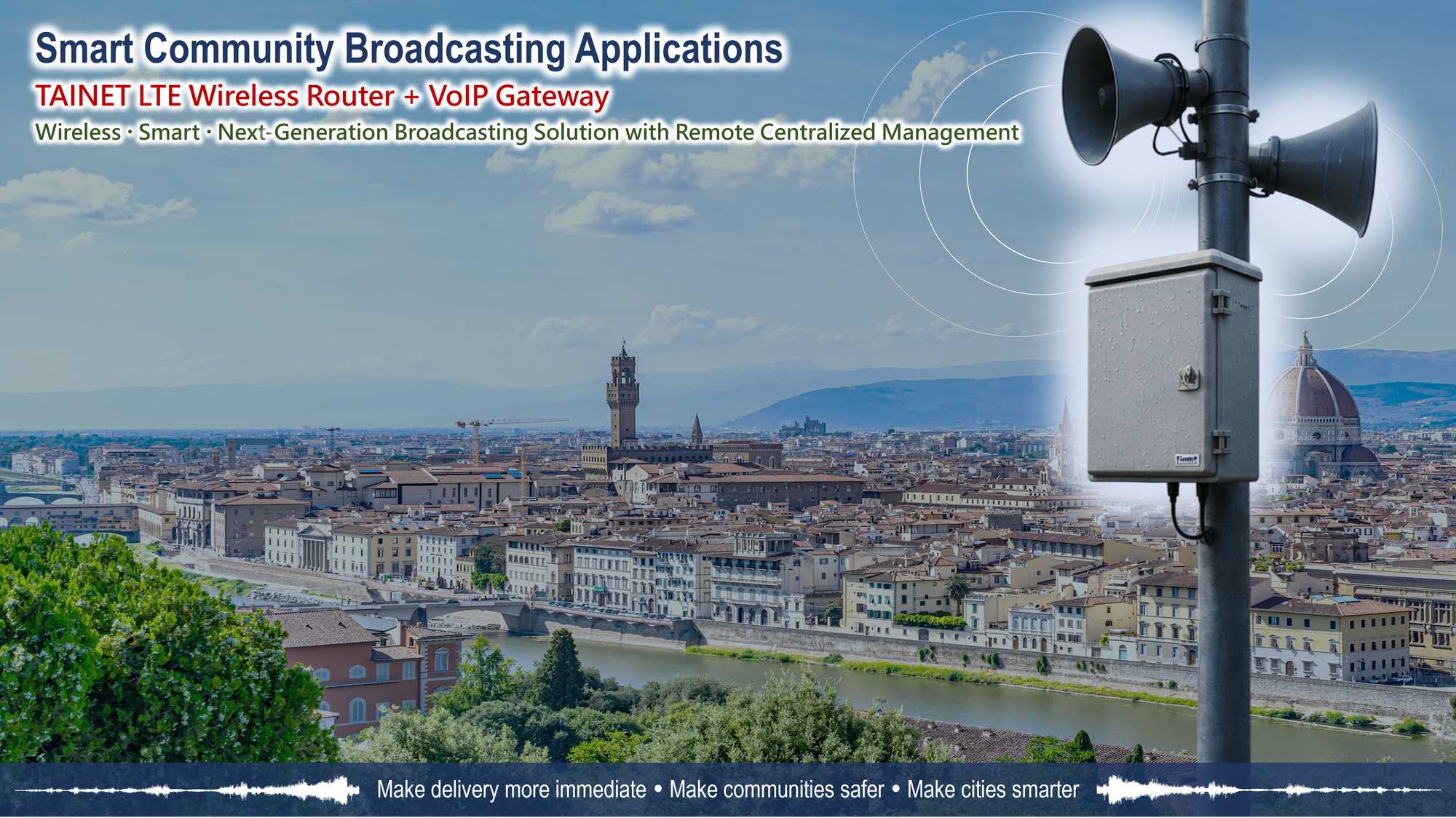
Traditional community broadcasting is often limited by physical cabling, resulting in aging lines that are difficult to maintain, high repair costs, and forcing village chiefs to operate from their offices. Furthermore, the noise interference from broadcasting simultaneously on all systems is a major management pain point.
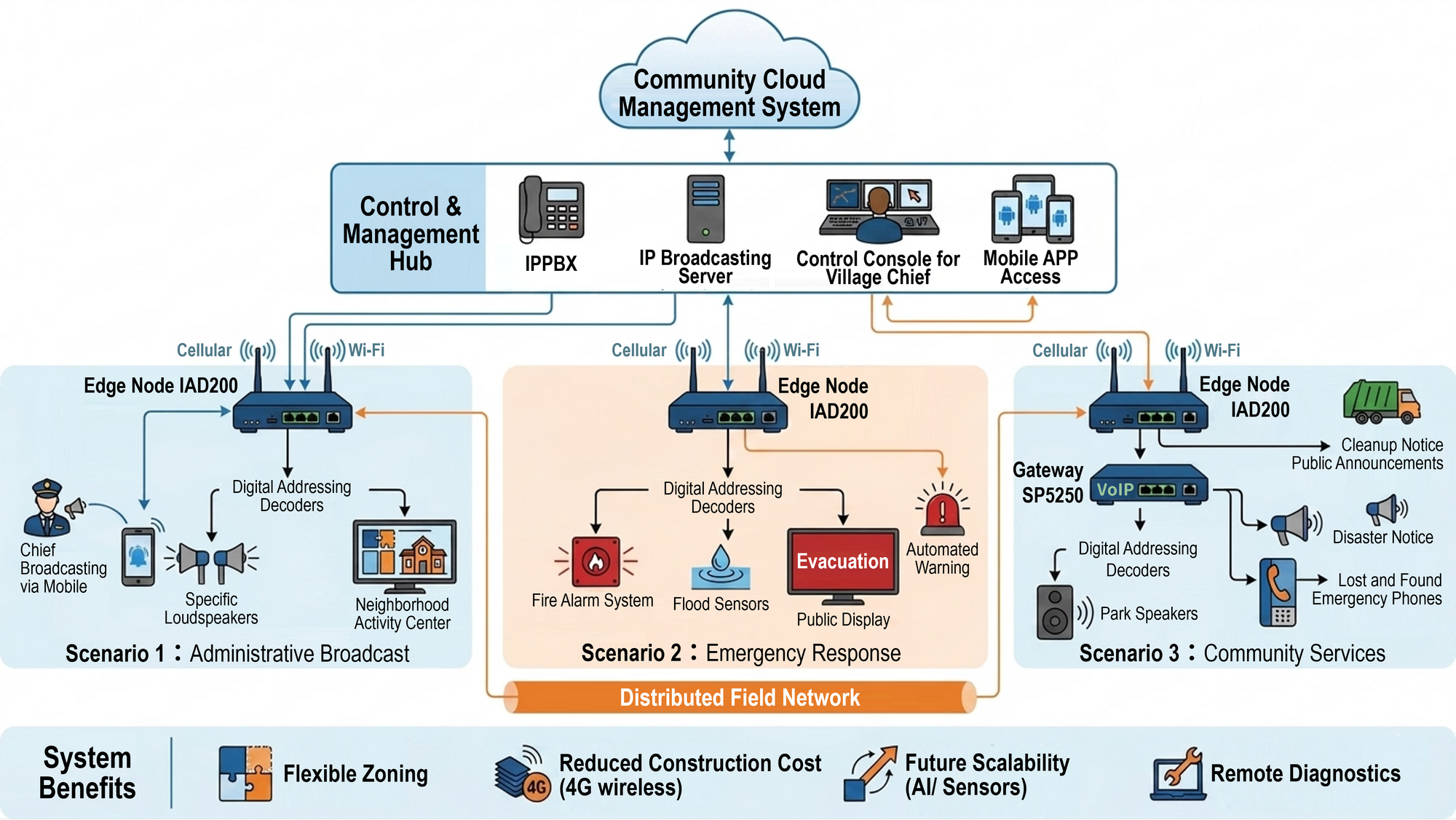
This solution promotes an "analog-to-digital" upgrade. Its core lies in retaining existing speakers while integrating a Taiwan Union Telecom VoIP gateway and an industrial-grade LTE router. By replacing physical cabling with wireless transmission, it solves the problem of line breaks and provides administrators with the flexibility of remote operation, enabling precise zoned broadcasting. Only minimal engineering is required to transform legacy systems into low-burden, high-efficiency smart broadcasting networks.
Upgrading Core Components
VoIP Gateway:A bridge between analog and digital
By interfacing traditional amplifiers with analog microphones via a VoIP gateway, audio signals can be packetized in real time, giving existing equipment an IP identity. This allows for seamless integration with VoIP exchanges, enabling convenient "broadcasting while making a call."
Industrial LTE Wireless Router:A transmission must-have breaking spatial limitations
For damaged lines or expansion nodes, the IAD200 replaces costly cabling with 4G wireless backhaul. Connecting to the host via a VPN encrypted tunnel enables digital addressing, achieving stable broadcasting with "wireless expansion and wired quality."
Transformation of Application Scenarios After Upgrade
"Mobile Broadcasting Station" Anytime, Anywhere
● Before Upgrade
A village chief discovering an emergency while patrolling the community had to return to his office to broadcast.
● After Upgrade
The village chief dials a dedicated extension via his mobile phone. The signal is processed by the IPPBX, converted by the VoIP Gateway, and broadcast directly to a specific area within the community, significantly improving mobility.
"Rapid rescue" for damaged old transmission lines
● Before Upgrade
A broadcast line in a remote park broke. Due to insufficient budget, the road could not be dug up again, leaving the area an information island.
● After Upgrade
An IAD200 was installed at the location, allowing direct wireless connection back to the system. The outdated system was instantly expanded into the wireless domain, reducing the construction period from weeks to days.
Integrating emergency rescue and smart notification
● Before Upgrade
Broadcasts could only play music or spoken messages.
● After Upgrade
Through the VoIP Gateway, analog emergency buttons in parking lots can be integrated. When someone presses the button, the system automatically dials the village chief's mobile phone and simultaneously activates the area's digital broadcast for alert.

Advantages of Overall Architecture Upgrade Application
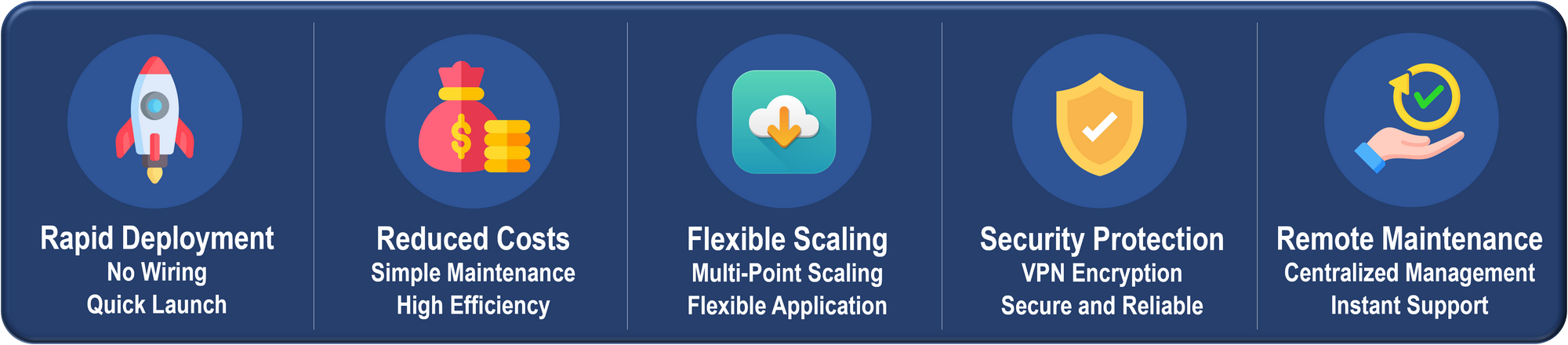
This solution utilizes IAD200 wireless transmission technology, eliminating the hassle of road closures, excavation, and cabling, achieving "zero-interference construction" and rapid deployment. Establishing an encrypted channel through LTE not only serves as a disaster recovery backup for traditional lines, enhancing communication resilience, but also integrates a VoIP Gateway to digitize existing speakers and audio equipment, preserving existing facilities.
In terms of management, the system supports remote cloud monitoring, automatic scheduling and dissemination, and remote diagnostics, significantly improving maintenance efficiency. The overall architecture connects the management end to the execution end, achieving precise area-driven operations and two-way communication, constructing an efficient and low-cost intelligent broadcasting path.
The First Choice for Low-Cost, High-Efficiency Digital Transformation
"Smart Community Communication" uses SIP voice and IAD200 to establish a resilient network, integrating new and old equipment through a VoIP gateway, eliminating line limitations, and extending system lifespan. This solution can be flexibly deployed according to community needs, providing residents with a safe, real-time, and seamless information environment. It is not only the most economical upgrade strategy but also a concrete practice of "smart governance" at the grassroots level.