Tutoring Institutions Smart Air Conditioning IoT Application
With the global trend towards net-zero carbon emissions and sustainable operations, the education industry is gradually adopting ESG sustainability principles. As high-density spaces, the air conditioning systems in tutoring institutions not only affect energy consumption but also directly impact student health and learning quality. By leveraging IoT technology to create a smart air conditioning management system, tutoring institutions can simultaneously achieve energy conservation and carbon reduction, optimize environmental quality, and improve operational efficiency, thus realizing sustainable development goals.
I. Pain Points and ESG Challenges of Air Conditioning Management in Tutoring institutions
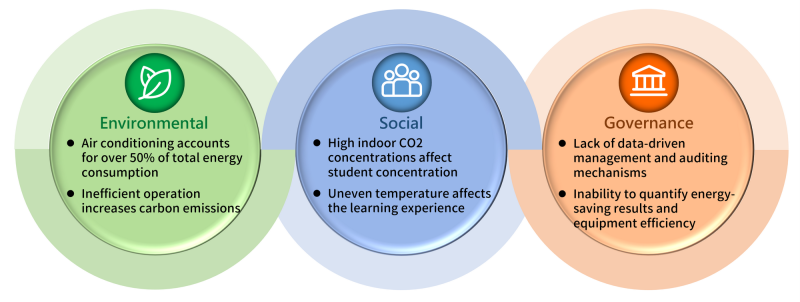
Common problems faced by tutoring institutions include concentrated but not fixed classroom usage times, high energy consumption due to prolonged operation of air conditioning equipment, low efficiency of manual management and lack of data support, and difficulty in consistently controlling air quality. Corresponding ESG aspects include:
II. Implementing a Smart Air Conditioning IoT System Architecture
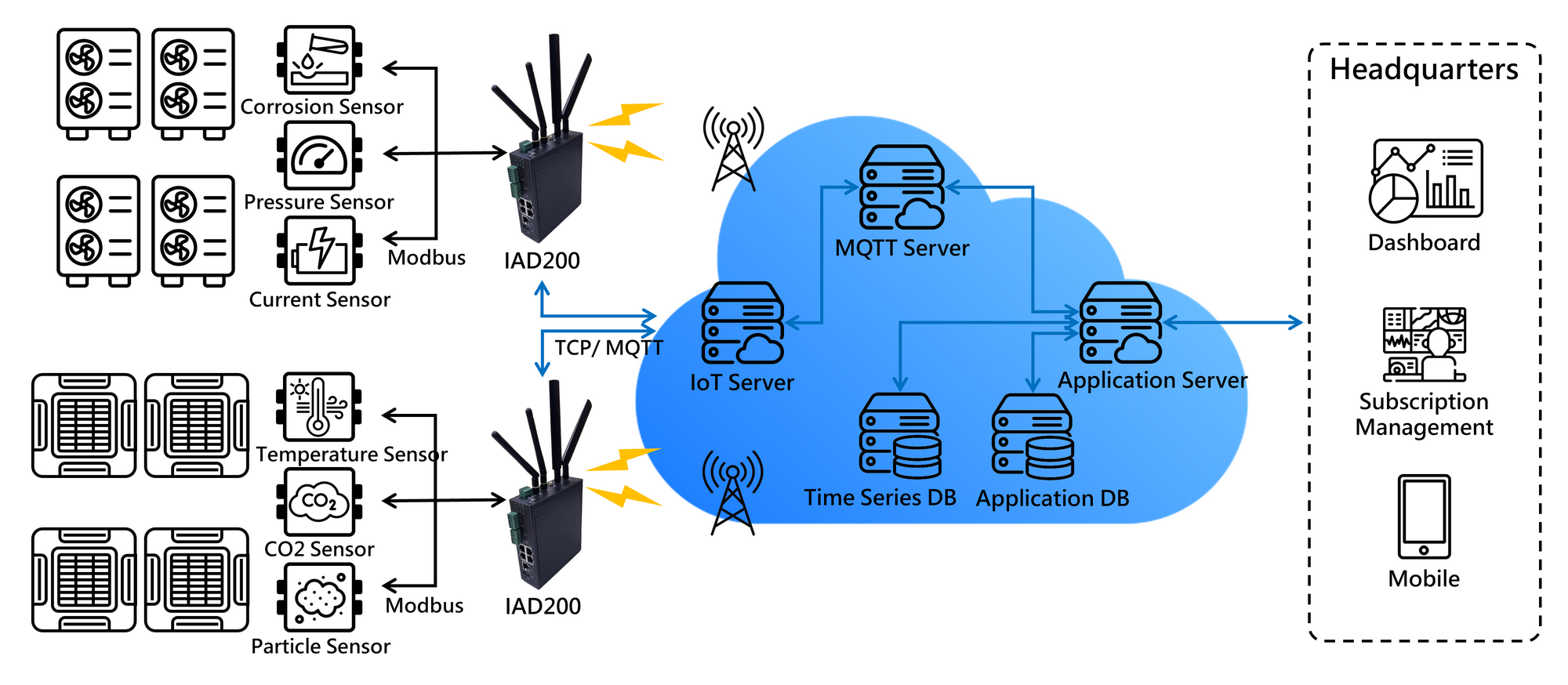
Through IoT technology, air conditioners, sensors, and a cloud platform are connected to build a visualized management system.
The core utilizes the IAD200 industrial 4G LTE router, integrating LTE, Ethernet, and RS485 interfaces, and supporting communication protocols such as MQTT, VPN (IPsec/ WireGuard), and Modbus RTU. The system can collect real-time air conditioner operating status and fault information, and combine this with environmental or pedestrian flow sensor data to achieve remote, precise monitoring and automated energy-saving scheduling.
III. Core Functions and ESG Benefits
| No. | Core Functions | ESG Benefits | |
|---|---|---|---|
| 1 | Smart Scheduling and Control ● Environmental ● Governance |
Automatic air conditioning control based on class schedules - Pre-cooling before class - Automatic shutdown after class - Stop operation during non-business hours |
● Reduce unnecessary power consumption ● Establish standardized management processes |
| 2 | Energy Saving through People Flow Sensing ● Environmental |
Determining classroom usage status through sensors - Automatic shutdown or heating when no one is present - Automatic adjustment of cooling capacity when the number of students increases |
● Reduce energy waste ● Reduce carbon emissions |
| 3 | Air Quality Management ● Social |
Combining CO₂ and temperature/ humidity monitoring - Automatic adjustment of air conditioning or ventilation - Maintain a comfortable learning environment |
● Improve student health and concentration ● Reduce risks in enclosed spaces |
| 4 | Central Monitoring and Multi-Location Management ● Governance |
Real-time monitoring via cloud platformt - Real-time monitoring of all classroom air conditioning statust - Remote Control Devicest - Unified Management Strategy |
● Improved Management Transparencyt ● Enhanced Cross-Location Operational Capabilities |
| 5 | Energy Analysis and Carbon Management ● Environmental ● Governance |
System Data Provided |
● As a Basis for Energy Saving Improvements ● Directly convert ESG reports ● Achieve zero-human, auditable, and sustainable management processes |
| 6 | Preventive Maintenance ● Governance ● Social |
Monitor Equipment Status - Filter Cleaning Reminders - Refrigerant Anomaly Warnings - Fault Early Warnings |
● Improved Equipment Reliability ● Ensuring Uninterrupted Learning |
IV. Communication and Cybersecurity Design
In terms of communication and cybersecurity applications, the aim is to create an efficient and robust digital management foundation for educational institutions. This application uses MQTT as the primary communication protocol. MQTT, with its low bandwidth consumption and high real-time performance, ensures extremely high data transmission efficiency and response speed even when many IoT devices are operating simultaneously in an educational setting, making it the preferred choice for IoT application architecture.
To achieve comprehensive monitoring and seamless integration from endpoints to the cloud, the communication layers are divided into device-side, gateway-side, and cloud-side. On the local device side, basic signal capture can be performed via Modbus RTU or infrared. The gateway-side converts underlying information into Modbus TCP to ensure efficient data exchange on the local end. Cloud services utilize MQTT and HTTPS for remote monitoring, ensuring stable data transmission over the wide area network.
Cybersecurity is an inviolable bottom line in educational settings. The application incorporates TLS 1.2/ 1.3 encryption protocols and VPN secure channels to build a robust protection network. With rigorous device authentication, unauthorized access is effectively prevented, ensuring the integrity and privacy of teaching and management data.
This application design is not merely a technological upgrade, but also aligns with ESG governance requirements. Through precise data collection and cybersecurity controls, organizations can achieve energy conservation and carbon reduction goals while safeguarding information security, demonstrating their commitment to digital responsibility and sustainable operation.
V. Application Scenarios

Large Chain Tutoring Institutions
● Headquarters manages air conditioning across multiple branches via a cloud platform, providing comfortable air quality.
● Real-time monitoring of energy usage at each location; smart temperature control enhances brand image.
● Unified energy-saving policies strengthen ESG sustainability.
● ESG report integration.

Small & Medium-Sized Arts and Talent Classrooms
● Automatic air conditioning control using class schedules.
● No additional manual operation required, reducing the problem of forgetting to turn off the air conditioning.
● Quickly implement low-cost IoT applications.
● As a differentiating advantage for student recruitment.
● No additional manual operation required, reducing the problem of forgetting to turn off the air conditioning.
● Quickly implement low-cost IoT applications.
● As a differentiating advantage for student recruitment.
VI. Benefits of Implementation
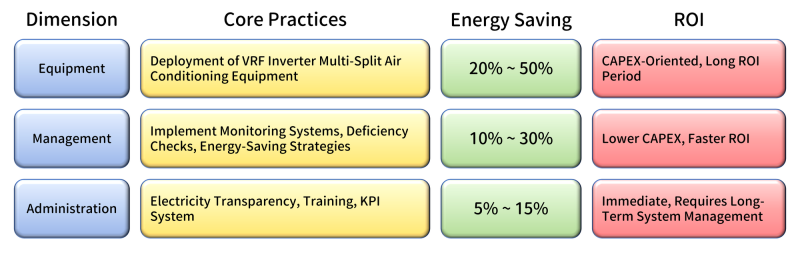
Implementing IoT applications without replacing existing air conditioning equipment enables remote monitoring and energy-saving control through the IAD200 industrial-grade 4G LTE router and sensors. The lower CAPEX investment effectively saves on electricity costs while improving air quality and comfort. Furthermore, data analysis enhances equipment maintenance and ESG management efficiency.
Opportunities for Digital Transformation and Sustainable Development
Introducing IoT applications into the teaching environment, while technology is developing rapidly, its essence should still be people-centered. It's not just about technological upgrades, but also profoundly impacts the nature of education. The essence of education lies in the cultivation and guidance of "people-centeredness", not only in the transmission of knowledge, but also in conveying core values of interaction, practice, and personalization. Smart air conditioning IoT applications aim to make education more effective while maintaining human warmth and safety.
By introducing smart air conditioning IoT applications into tutoring institutions, they can transform themselves from "passive equipment users" to "proactive smart management". This not only effectively reduces energy costs and comprehensively enhances operational value from the three dimensions of ESG, but also improves the quality of the teaching environment and brand competitiveness. This solution is highly scalable, achieving energy conservation and carbon reduction in the environment, improving the learning environment in society, and establishing data-driven and transparent management in governance. It can be gradually integrated into smart campus and smart city architectures, becoming a crucial key for the education industry towards sustainable development and digital transformation.