Smart Parking Emerges, IAD200 Becomes a Communication Platform
With the rapid development of smart cities, traditional parking management is gradually transforming into a smart and unmanned model. In the past, it relied heavily on manual patrols and paper-based ticketing, which was not only inefficient but also prone to problems such as untimely parking information, low parking space utilization, and high management costs. Now, through the integration of smart parking pillars, AI license plate recognition, geomagnetic sensors, and cloud platforms, parking space status can be monitored in real time, providing automatic billing, electronic payment, and smart guidance services.
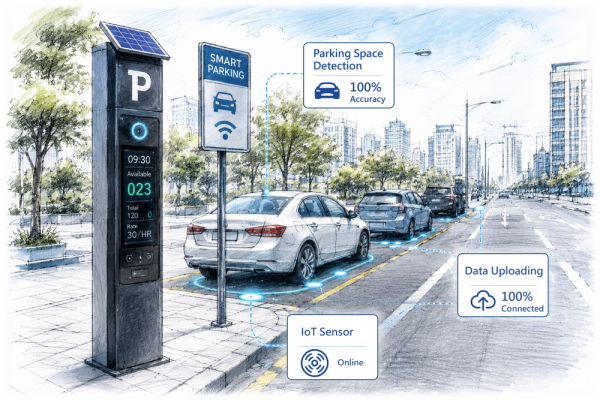
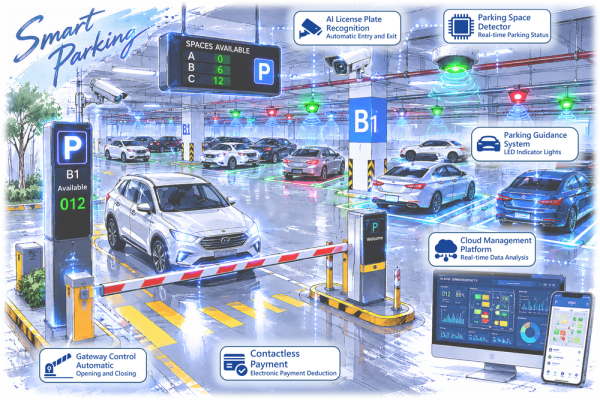
In roadside parking applications, parking pillars transmit parking space information to the cloud platform in real time via sensors or cameras. Available parking spaces can then be found through an app or electronic signage, significantly reducing search time, and improving parking turnover and fee collection efficiency. In parking lots, AI license plate recognition, parking guidance, contactless payment, and cloud management platforms have become the mainstream architecture. Drivers can automatically enter and exit using license plate recognition and complete payment electronically, alleviating traditional queuing problems.
The Role of IAD200 in Smart Parking Applications
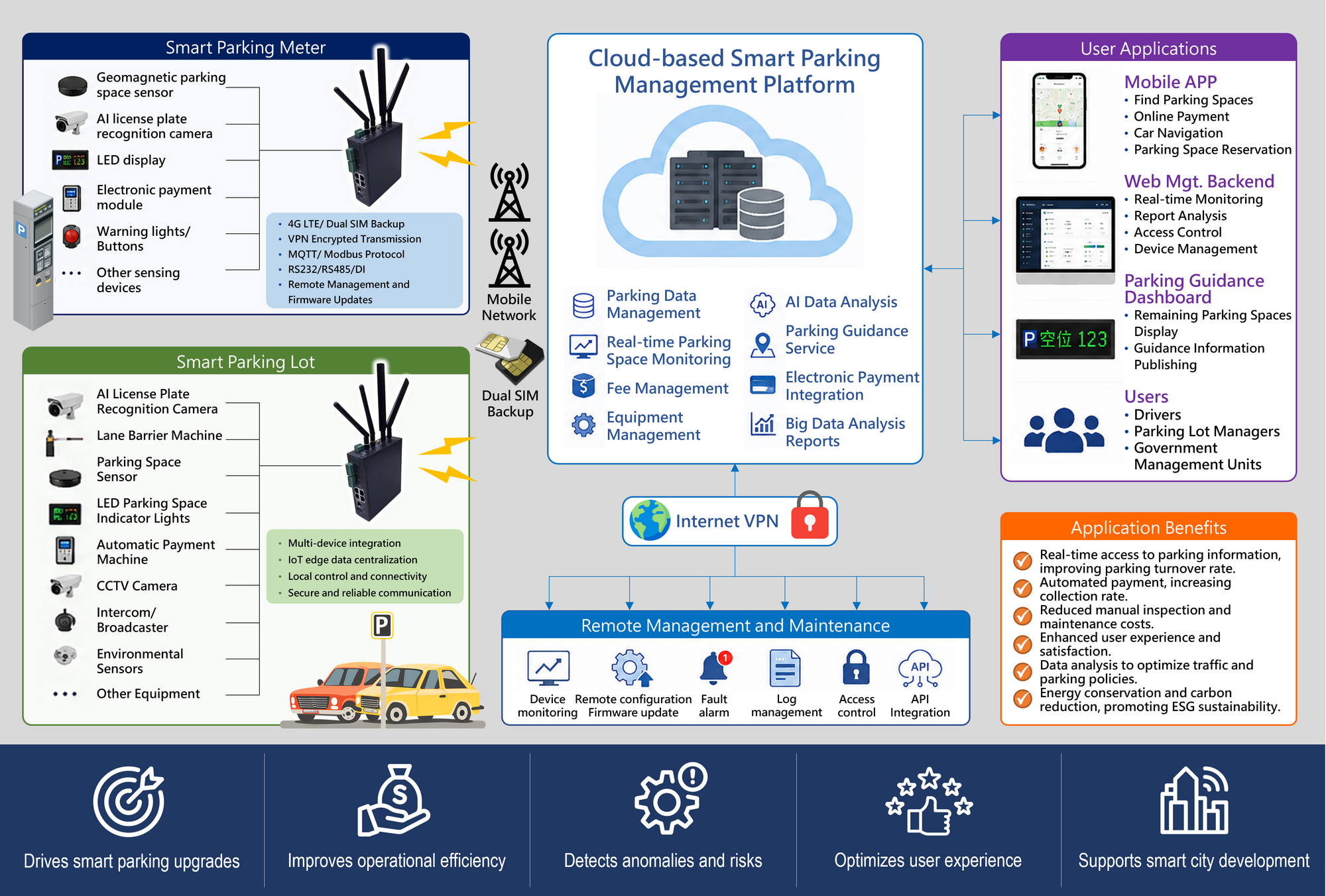
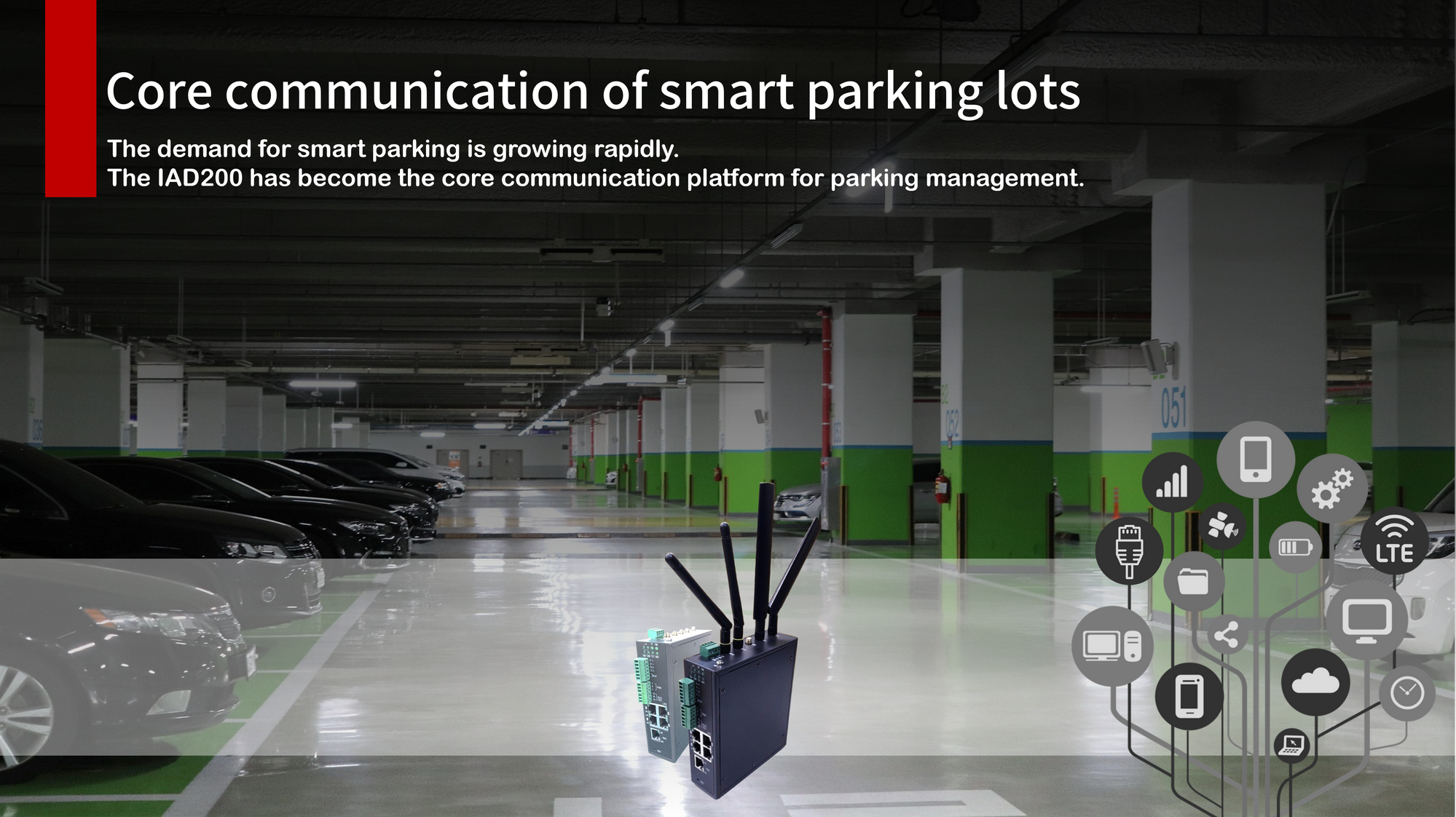
As a core communication device in smart parking systems, the IAD200 integrates sensors, a cloud platform, and a remote management system. Supporting dual SIM redundancy and VPN communication, it can quickly establish a stable wireless transmission environment even without a fixed network, making it particularly suitable for deployment in parking pillars, parking lots, and smart city roadside equipment.
Furthermore, the IAD200 supports industrial IoT protocols such as RS232, RS485, Modbus RTU/TCP, MQTT, and Ethernet. It can integrate geomagnetic sensors, license plate recognition cameras, LED displays, barrier gates, and payment devices, uploading data to the cloud platform in real time. In large venues, it can also centrally manage various parking equipment and CCTV security systems, reducing system integration complexity. Its VPN, firewall, and remote management functions also enhance system security and maintenance efficiency.
Smart Parking Meter Application
Smart parking meters are used for roadside parking management. Through license plate recognition, geomagnetic sensors, and cloud platform integration, they provide real-time monitoring of parking space status and information. The system's front end includes geomagnetic sensors, license plate recognition cameras, LED displays, electronic payment modules, and alarm devices, responsible for detecting vehicle entry and exit, recognizing license plates, and displaying parking information. All devices connect via 4G LTE or wired networks, uploading data to a cloud-based smart parking platform for parking space monitoring, automatic billing, parking guidance, and big data analysis. The platform allows the public to check available parking spaces in real-time via an app or electronic signage. This effectively reduces the costs of manual inspections and ticketing, increases parking turnover and payment efficiency, and reduces traffic congestion and carbon emissions caused by vehicle detours.
Smart Parking Lot Application
Smart parking lots integrate license plate recognition, parking space sensing, parking guidance, and electronic payment systems to establish a complete smart parking management environment. The system front-end includes license plate recognition cameras, barrier gates, ultrasonic parking space sensors, LED parking space indicators, CCTV security equipment, and automatic payment machines, providing real-time monitoring of vehicle flow and parking space occupancy. All devices are integrated through IoT gateways and Ethernet, RS485, or 4G LTE networks, transmitting data to a cloud management platform. This platform provides real-time monitoring, remaining parking space statistics, remote device management, report analysis, and integrated electronic payment functions. Users can use a mobile app for parking navigation, online payment, and vehicle location services, improving parking efficiency, reducing management costs, and optimizing parking resource allocation through big data analysis.
Smart Parking Drives Efficiency and Sustainable Transportation Development
The integration of smart parking pillars and smart parking lot solutions can significantly improve urban parking management efficiency and user experience. Through the integration of AI license plate recognition, parking space sensors, cloud platforms, and IoT communication technologies, management units can monitor the usage of parking lots and roadside parking spaces in real time, reducing manual inspections and ticketing costs, while increasing parking fee collection rates and parking space turnover rates. Drivers can quickly find available parking spaces, complete electronic payments, and navigate to their cars using mobile apps or electronic signage, reducing time spent searching for parking spaces and alleviating traffic congestion.
Furthermore, smart parking systems can combine big data analytics and AI technology to analyze parking hotspots, peak traffic flow, and usage habits, assisting governments and businesses in optimizing traffic policies and parking resource allocation. For large shopping malls, hospitals, campuses, and public parking lots, remote monitoring and equipment management functions can further improve maintenance efficiency and system stability. Further integration of electric vehicle charging, energy-saving lighting, and ESG management mechanisms can effectively reduce energy waste and carbon emissions, aligning with the trends of smart cities and sustainable development.
The future of smart parking will move towards AI-driven, unmanned, and cloud-based solutions, with industrial-grade IoT communication equipment becoming a crucial core for the stable operation of the overall system. Through high-reliability LTE communication, VPN security protection, and the integration of diverse IoT protocols, a highly secure, efficient, and scalable smart parking infrastructure can be rapidly constructed. Whether it's roadside smart parking pillars, shopping mall parking lots, or smart city transportation infrastructure, smart parking solutions can enhance management efficiency and urban service quality, creating a more convenient, safer, and more sustainable smart transportation environment.